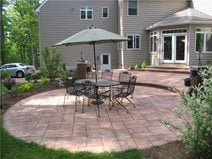
Concrete Patio Layout: Your Step-by-Step Guide To A Stunning Outdoor Space
Dreaming of a backyard oasis but overwhelmed by where to start? The secret to a flawless outdoor living space isn't just in the materials you choose—it's in the concrete patio layout that forms its very foundation. A poorly planned layout can lead to a cramped, inefficient, or visually disjointed space, no matter how expensive the finish. Conversely, a smart, well-considered layout transforms a simple slab of concrete into a dynamic extension of your home, perfectly tailored to your lifestyle. This comprehensive guide will walk you through every critical step, from initial assessment to final design details, ensuring your patio project is both beautiful and functional. Let's dive in and turn that concrete vision into a tangible, breathtaking reality.
1. Assessing Your Space and Defining the Patio's Purpose
Before you draw a single line or buy a single paver, you must answer one fundamental question: What will this patio be for? The purpose dictates every subsequent decision. Is it an intimate retreat for morning coffee and evening reading? A sprawling entertainment hub for large gatherings with a built-in outdoor kitchen? A family-friendly zone with space for a play set and lawn games? Or a serene garden pathway connecting different areas of your yard? Your answer defines the required square footage, traffic flow, and necessary zones.
Start with a site analysis. Grab a tape measure, graph paper, or a simple app like SketchUp Free or Planner 5D. Accurately measure the entire proposed area, noting existing features: trees (and their root systems), utility lines, property lines, slopes, and the proximity to your house. Observe the sun's path throughout the day. A south-facing patio will be a solar powerhouse, while a north-facing one might be shadier and cooler. Note prevailing winds—you don't want your cozy corner constantly battered by gusts. Also, check local building codes and permit requirements for setbacks, height, and footings, especially if you're adding a structure like a pergola. This initial homework prevents costly mistakes later.
Finally, honestly assess your budget and DIY skill level. A complex multi-level patio with integrated seating and a fire feature is a significant investment, often ranging from $15 to $50+ per square foot for professional installation. A simple, single-level slab is far more budget-friendly. Understanding your constraints here is crucial for a realistic concrete patio layout.
2. Core Design Principles for Functional Flow and Aesthetics
With purpose and site data in hand, it's time to apply universal design principles. The goal is to create a space that is both beautiful and highly usable.
The "Zoning" Strategy
Think of your patio like a room in your house. You wouldn't place your dining table in the middle of your living room walkway. Similarly, divide your patio into functional zones:
- Active Zone: For grilling, dining, and high traffic.
- Social Zone: A seating area with sofas or chairs for conversation.
- Quiet Zone: A solitary nook with a lounge chair or hammock.
- Service Zone: For storage, utility access, or a potting bench.
Use changes in paving material, color, or level (steps or raised planters) to subtly define these areas without walls. For example, use a different stamped concrete pattern for the dining area and a smooth, exposed aggregate for the walkway leading to it.
Traffic Flow and Circulation
Paths should be intuitive and wide enough for comfortable movement. Main thoroughfares should be at least 48 inches wide to allow two people to walk side-by-side. Secondary paths can be 36 inches. Avoid creating "desire lines"—unofficial paths that form because your layout forces people to cut across planting beds. Design your layout to guide foot traffic naturally. Place entry and exit points logically, often aligning with doors or garden gates.
Scale and Proportion
A massive patio on a small lot will overwhelm the house and yard. A tiny patio on a large property will feel insignificant. The patio's size should be proportional to your home's footprint and the surrounding landscape. A good rule of thumb is that the patio area should not exceed 30-40% of your total backyard space, leaving room for lawn, gardens, and breathing room. Use the "golden ratio" (approximately 1:1.618) for rectangular shapes to create pleasing, balanced dimensions. For example, a 20-foot wide patio might feel best at a length of 32 feet.
Sight Lines and Focal Points
From inside your home, what do you want to see? Frame a beautiful view with your layout. Conversely, what unsightly element (AC unit, neighbor's shed) do you need to screen? Your layout can position seating, planters, or a decorative screen to hide eyesores. Create at least one focal point—a fire pit, a stunning water feature, a piece of sculpture, or a lush planter group—to draw the eye and anchor the space.
3. Choosing the Right Concrete Finish and Material Palette
The concrete patio layout is the skeleton, but the finish is the skin. Your choice dramatically impacts aesthetics, slip-resistance, maintenance, and cost.
- Plain Broom Finish: The most economical and common. A textured surface created by dragging a broom across wet concrete. It's functional and slip-resistant but plain.
- Stamped Concrete: This is where creativity shines. Wet concrete is imprinted with molds to replicate the look of brick, slate, stone, or wood. It's colored with integral dyes or surface hardeners. Perfect for achieving high-end looks at a fraction of the cost of natural materials. Popular patterns include Ashlar slate, cobblestone, and wood plank.
- Exposed Aggregate: The top layer of cement is washed away to reveal the colorful stones (pea gravel, quartz, granite) within. It's extremely durable, slip-resistant, and has a sophisticated, textured look.
- Polished Concrete: Mechanically ground and honed to a smooth, glossy finish, often with decorative dyes. More common for interiors but can be used outdoors with a slip-resistant additive. Requires more maintenance.
- Stained Concrete: Acid or water-based stains chemically react with the concrete to create permanent, variegated, marble-like color. It's applied to existing or new concrete and sealed. Great for adding rich, earthy tones.
Pro Tip: Don't feel limited to one finish! A concrete patio layout can beautifully combine materials. Use stamped concrete for the main dining area, a broom finish for high-traffic paths, and exposed aggregate around a fire pit for visual and textural contrast. This delineates zones and adds immense visual interest.
4. Pattern and Paver Layout: Creating Visual Rhythm
How you arrange your concrete slabs or pavers (if using pavers over a concrete slab) is a powerful design tool. The pattern influences perceived size, direction, and formality.
- Running Bond (Brick Pattern): The simplest and most common. Pavers are offset by half their length. It's easy to install, creates a subtle directional flow, and is very stable.
- Stack Bond: Pavers are aligned in straight, grid-like lines. It's modern, clean, and formal but can be less structurally stable on its own, often requiring a concrete base or edge restraints.
- Herringbone: Pavers are laid at 45- or 90-degree angles in a V-shaped pattern. Extremely interlocked and stable, it creates a dynamic, energetic, and classic look. Perfect for high-traffic areas or as a border.
- Circular or Radial Patterns: Pavers are laid in concentric circles or spokes from a central point (like a fire pit or fountain). This creates a stunning focal point and is ideal for round patios or as a design element within a larger rectangular layout.
- Random/Ashlar Pattern: Uses pavers of three or four different sizes laid in a seemingly random, but carefully planned, mosaic. It mimics natural stone and is very forgiving for slight imperfections.
Direction Matters: Patterns can make a space feel wider or longer. A running bond laid perpendicular to your house will "push" the patio outward, making it feel deeper. Laid parallel, it will emphasize the width. Use diagonal patterns (45-degree angles) to make a small patio feel larger and more dynamic, though they require more cutting and are more complex to install.
5. Integrating Essential Elements: Seating, Fire, and Shade
A layout is empty without considering the key elements that bring it to life. Incorporate these into your plan from the start.
- Built-in Seating: The ultimate space-saver and aesthetic unifier. Concrete benches, seat walls, or curved banquettes built from the same material as your patio create a seamless, custom look. Plan for them early, as they become permanent architectural features. Ensure they are a comfortable depth (15-18 inches) and height (18-19 inches for the seat, with a slight recline).
- Fire Features: A fire pit or fireplace is a natural gathering point. Your layout should center social zones around it. Allow at least a 4-foot radius of clearance around a fire pit for safe seating. Consider the smoke direction—position it upwind of seating areas. A linear fire feature can double as a room divider.
- Shade Structures: Sun management is critical for comfort. Will you need a pergola, cantilever umbrella, or retractable awning? Include their footprint in your layout. A pergola's posts will occupy permanent space. Ensure shade structures don't block views or create dark, unused corners.
- Outdoor Kitchen/Bar: If entertaining is key, this is your command center. Plan for the "work triangle" (grill, sink, prep area) just like in an indoor kitchen. Allow ample counter space (at least 24 inches depth), room for the grill to open safely, and space for a helper to move behind. Include storage cabinets and a trash/recycling nook within the layout.
6. Mastering Drainage and Grading: The Non-Negotiable Foundation
This is the most critical technical aspect of any concrete patio layout. Water is concrete's biggest enemy. Standing water causes cracking, spalling, and slippery surfaces. Your patio must have a proper slope for drainage.
- The Slope Rule: The entire patio surface should slope away from your house at a minimum gradient of 1/8 inch per foot (a 2% slope). For a 20-foot deep patio, the far edge should be at least 2.5 inches lower than the edge against the house. Use a long level and a straightedge during installation to check this constantly.
- Drainage Systems: Where does the water go? Ideally, it drains into an existing storm drain, a dry well, or a vegetated swale. If the patio is a low spot, you must install a drainage system.
- Surface Drains: Catch basins with grates placed at low points.
- French Drains: A perforated pipe in a gravel-filled trench, covered with landscape fabric, that redirects subsurface water.
- Channel Drains: Linear drains, often used along the perimeter or in the middle of a large patio, especially useful for modern, minimalist designs.
- Control Joints: These are pre-planned, weakened lines (created with a jointer tool) in the concrete slab. They control where the concrete cracks as it cures and settles. They are not optional. Joint spacing depends on slab thickness (typically every 8-12 feet for a 4-inch slab) and should be at least 1/4 the depth of the slab. They should be placed at changes in direction and at the inside corners of any "L" or "T" shaped patios.
7. Lighting and Utilities: Planning for Night and Function
A fantastic layout is useless after dark without a lighting plan. Integrate lighting types into your layout drawing.
- Task Lighting: For specific activities—grill area, prep counter, reading nook. Use directional spotlights or under-counter LED strips.
- Ambient Lighting: For overall illumination. Recessed well lights in the patio surface, post caps on seat walls, or soft string lights overhead.
- Accent Lighting: To highlight architectural features, plants, or sculptures. Use well lights or small spotlights aimed at focal points.
- Safety Lighting: Path lights along walkways and steps.
Crucially, plan for electrical and gas lines before you pour. If you want an outdoor kitchen, fireplace, or even just outlets for holiday lights or a sound system, you need to run conduits beneath the slab. This is a major, expensive retrofit if done after the fact. Mark all conduit locations on your layout plan. Similarly, if you have or plan a gas line for a grill or fire pit, it must be installed by a licensed professional before the pour.
8. Common Layout Mistakes and How to Avoid Them
Even with the best plans, pitfalls exist. Here’s how to sidestep them:
- Ignoring the "Golden Rectangle": Avoid long, narrow strips. If your space is inherently narrow, break it up with zones, planters, or changes in level to create more intimate, square-ish areas.
- Forgetting Furniture Scale:Always create a scaled furniture layout. Use cut-out shapes of your actual outdoor furniture (dining set, sofa, chairs) on your graph paper. You need at least 36 inches of clearance around furniture for comfortable movement.
- Overlooking Utility Access: Never build over a clean-out, meter, or HVAC unit. You need 3-5 feet of clear access. Design your layout to work around these necessities, perhaps screening them attractively.
- Creating a "Dead Zone": Avoid placing seating or dining areas in corners that get no sun or are too exposed to wind. Ensure every primary zone has a purpose and a comfortable micro-climate.
- Underestimating Expansion Joints: Concrete expands and contracts. A large, uninterrupted slab will crack randomly. Your control joints (see Section 6) are your friends. For very large patios (over 100 sq ft), consider installing a expansion joint (a full-depth, compressible material like foam) around the entire perimeter and at intervals to allow for thermal movement.
9. The Final Plan: From Paper to Reality
Your final concrete patio layout plan should be a clear, scaled drawing (1/4" = 1' is standard) that includes:
- Property lines and house footprint.
- All existing and proposed features: trees, shrubs, utilities, patio outline, zones, seating walls, fire pit, planters, steps.
- Drainage arrows showing the 2% slope direction.
- Location of all control joints.
- Electrical/gas conduit routes and fixture locations.
- Material callouts (e.g., "Stamped Ashlar Slate - Color: Sierra Tan," "Broom Finish - Path").
- Dimensions for everything.
This plan is your blueprint. Give it to your contractor for an accurate quote. If you're DIYing, it's your instruction manual. It prevents "winging it," which is the #1 cause of patio regrets.
Actionable Checklist Before You Break Ground:
- Purpose and primary use defined.
- Accurate site survey completed.
- Sun path and wind patterns noted.
- Building codes and permits researched.
- Scaled furniture layout completed.
- Final material and pattern selections made.
- Drainage slope and system engineered.
- Control joint pattern planned.
- All utility lines (electrical, gas, water) located and planned for.
- Lighting plan integrated.
- Final, detailed plan drawn and reviewed.
Conclusion: Building More Than a Patio—Building an Experience
A successful concrete patio layout is so much more than a geometric shape on the ground. It is the thoughtful orchestration of how you will live, laugh, and relax in your outdoor haven. It’s the difference between a space you simply have and a space you truly love. By methodically working through the assessment of your needs, the application of core design principles, the careful selection of finishes and patterns, and the non-negotiable engineering of drainage and utilities, you build a foundation for endless memories.
Remember, this is your outdoor living room. Treat its layout with the same care and consideration you would an interior renovation. Invest the time in planning, and you will be rewarded with a durable, beautiful, and perfectly functional extension of your home that will increase your property's value and, more importantly, your daily enjoyment of it for years to come. Now, grab that tape measure and start dreaming—your perfect patio layout awaits.